The European removals process looks simple from the outside: a van arrives, your furniture leaves, and a few days later it turns up in Spain, France or Poland. Since Brexit there are more steps in between – mostly paperwork that happens before the van even reaches Dover. This guide walks you through every stage, from the first quote to unpacking in your new home, so you know what to expect and what we will ask you for.
Step 1: Survey and quote
Everything starts with what you are moving and where. We ask for the collection and delivery addresses (town and postcode are enough at this stage), access details such as stairs, lifts and parking, a rough list of rooms or furniture, and your preferred dates. A video or photo survey is usually enough for a European move.
From that we suggest the right option: a part load (you share the vehicle and the cost with other customers on the same route), a dedicated van, or a van with a trailer for bigger homes. If you are not sure which suits you, read Part load or full van to Europe: which is best for your move? or simply ask for a free quote – we can price both.
Step 2: Booking and dates
Once you accept the quote we fix the collection window and an estimated delivery window. Part loads have more flexible dates because the vehicle follows a route; a dedicated van can usually give you a firmer date. If your new home is not ready yet, we can arrange storage between moves.
Step 3: The customs inventory
For any move between the UK and the EU, your belongings travel as goods crossing a customs border. That means a detailed inventory: what is in each box or item, roughly how much it is worth, and whether it is used household goods. A vague list such as “kitchen stuff” causes delays. Our guide customs inventory for removals explains what to write.
At this stage we will also ask for the documents your destination country needs for relief from import duty and VAT on used personal belongings – usually proof that you lived in the UK, proof of your new address, and an ID or residence document. Each country has its own rules: see our France customs guide and Spain customs guide.
Step 4: Packing and collection
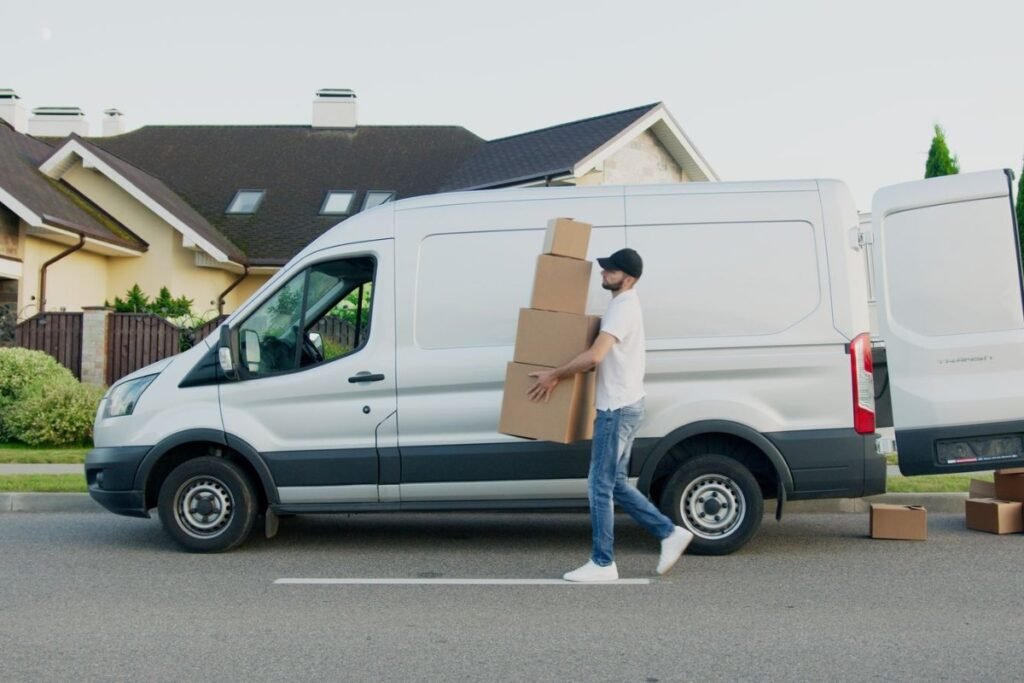
On collection day the crew wraps furniture, loads the vehicle and checks the load against the inventory. Some items cannot travel on a removals lorry at all (flammables, gas bottles, some food and plant material). Check what you can and can’t take before you pack.
Step 5: Export from the UK
Before the goods leave Great Britain, an export declaration is made to HMRC. Most people use a customs agent for this rather than doing it themselves – GOV.UK explains the steps in Export goods from the UK: step by step. As a removals company that also does customs, we prepare it for you as part of the move.
Step 6: ENS, GMR and the crossing
Two more references are needed before the vehicle boards the ferry or train:
ENS (entry summary declaration) – safety and security data sent to the EU before the goods arrive, through the EU’s ICS2 system. The carrier is responsible for it.
GMR (goods movement reference) – created in HMRC’s Goods Vehicle Movement Service. It links the vehicle to its customs declarations, and the driver shows it at check-in at ports such as Dover and the Channel Tunnel.
One missing or wrong reference is the most common reason a removals vehicle is held at the port. That is why we check every reference before the driver sets off.
Step 7: Transit through Europe
If your goods are cleared at the border, the vehicle drives straight on. If they are cleared at an inland customs office closer to your new home, they travel under a transit document (T1), which keeps duty and VAT suspended until the goods reach that office. Which route is better depends on the country and the size of the load – we plan it when we quote.
Step 8: Import clearance in the EU
At the destination, the goods are declared for import. If you meet the country’s conditions for moving your normal residence (for example living outside the EU for at least 12 months and owning the items for at least 6 months, in most EU countries), used household goods can be imported without duty or VAT. Customs may check the load against the inventory, so an accurate list really does save time.
Step 9: Delivery and unpacking
After clearance the crew delivers to your new address, places furniture in the rooms you choose and reassembles anything we dismantled. Check items off the inventory as they come in and tell us straight away if anything is missing or damaged.
How long does it all take?
As a rough guide: quote and booking within a few days; customs paperwork prepared in the week before collection; a dedicated van to France, Belgium or the Netherlands often delivers within 2–4 days of collection, Spain, Italy or Poland within about 3–7 days; part loads take longer because they follow a route. Customs checks or missing documents can add days, which is why we sort paperwork early.
Planning a move to Europe?
MoveDay Removals moves homes between the UK and Europe and handles the customs side in the same booking – export, ENS, GMR, T1 and import. Get your free European removals quote or read more about our international removals and customs for household goods.
Website: https://movedayremovals.com
Phone: 07378 626882
Email: office@movedayremovals.co.uk